
ASUU gives Jigawa Government two weeks to implement new salary structure, Government reacts
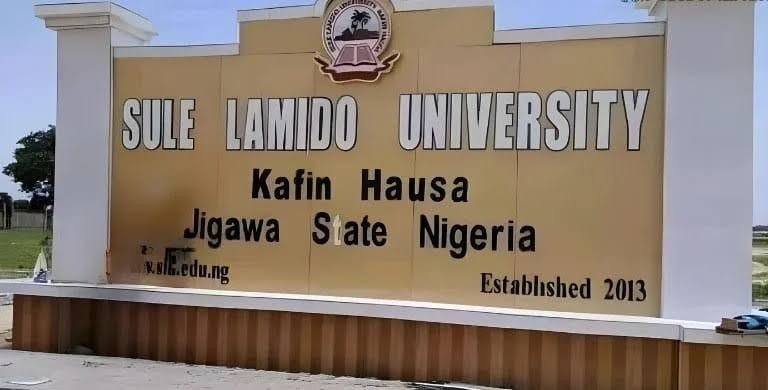
- Sule Lamido University lecturers threaten industrial action over salary arrears, IPPMS exemption and unpaid allowances
The Academic Staff Union of Universities (ASUU), Sule Lamido University Kafin Hausa (SLUK) branch, has issued a two-week ultimatum to the Jigawa State Government to implement the new university salary structure and address other outstanding demands or face industrial action.
The ultimatum was contained in a statement dated 1 September 2026 and signed by the branch chairman, Idris Chiromawa.
The union said its members had continued to work under the lower salary structure for about seven months despite the approval of a new salary package.
According to ASUU-SLUK, several other state-owned universities have implemented the agreement, while the Jigawa Government has delayed its implementation.
The union said it had written three formal letters to the Commissioner for Higher Education, Yusif Chamo, and the Speaker of the Jigawa State House of Assembly, Haruna Aliyu, while also engaging community leaders in an effort to resolve the matter.
It said those efforts had not produced the desired dialogue with the government.
Among its demands, ASUU is seeking immediate implementation of the agreement between ASUU and the Federal Government, as well as payment of salary arrears accrued from January 2026.
The union also wants SLUK exempted from the state’s Integrated Payroll and Personnel Management System (IPPMS), which it described as ineffective and incompatible with the peculiarities of university administration.
Other demands include the remittance of outstanding third-party salary deductions, payment of the 2024/2025 Earned Academic Allowance (EAA), settlement of selective responsibility allowances, restoration of annual increments withheld since 2023 and payment of promotion arrears owed to staff, including professors, since 2024.
ASUU also called for a review of the state government’s decision to deduct 0.7 per cent from the statutory two per cent Local Government contribution to the university, while urging the government to develop sustainable funding arrangements for its tertiary institutions.
The union said it had exhausted peaceful and administrative avenues for resolving the dispute.
“Should the Government fail to address these issues at the expiration of the two-week ultimatum, the union would be left with no option but to embark on a strike,” the statement said.
The ultimatum took effect on 1 September and is expected to expire in mid-September.
Government says demands already approved
The Jigawa State Government, however, said the dispute was largely the result of a communication gap between it and the union.
Chamo told reporters on Wednesday that virtually all of ASUU’s demands had been approved and were awaiting implementation.
He said the ultimatum was unexpected given the government’s investment in tertiary education.
“Since the inception of Governor Umar Namadi’s administration, the state has been committed to uplifting the standard of education—from addressing teacher shortages to developing vital infrastructure across our tertiary institutions,” Chamo said.
The commissioner cited a ₦10 billion project at Sule Lamido University, including the construction of a Faculty of Medicine, completion of three female hostels and development of a specialised Wetland Research Centre.
On staff welfare, Chamo said the government had made progress in settling outstanding arrears.
“In terms of welfare, we have done our best to settle outstanding arrears. It came as a surprise that the union decided to embark on strike action,” he said.
He attributed the dispute to what he described as a breakdown in communication, saying the government had already begun steps to address the union’s demands.
On implementation of the ASUU-Federal Government agreement, Chamo said the state had received correspondence from the National Universities Commission (NUC) the previous week and had forwarded it to university management to ensure the financial implications were reflected in the upcoming budget.
He said the government had also convened an emergency meeting involving the Attorney-General, Accountant-General and Commissioner for Higher Education, as well as representatives of the union, in an effort to resolve the dispute.
Government officials expressed confidence that the matter would be resolved amicably after the parties reviewed the progress already made and the state’s budgetary plans.