
Two rescued alive nine days after Nepal glacier disaster

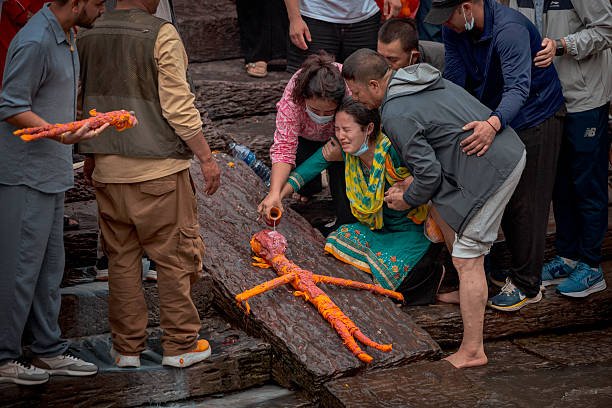
- Workers found in hydropower tunnel as death toll in Nepal and Tibet rises above 1,300
Rescuers have pulled two workers alive from a tunnel linked to a hydropower station on Nepal’s Trishuli River, nine days after a wall of ice, rock and mud swept through the valley in a disaster that has killed more than 1,300 people and left thousands missing.
The two workers, Kabir Maharjan and Sanjay Sah, were rescued from the Upper Trishuli 3A Hydropower Station on Friday, according to information reported by Reuters.
They are the first people rescued from tunnels connected to the hydropower projects following the disaster and were taken to an army hospital in Kathmandu.
Officials and rescue workers believe the 26 August collapse of a glacier in the upper reaches of the river trapped at least 900 people in tunnels associated with six hydropower projects.
Videos released by Nepali authorities showed Maharjan being lifted from an opening in the ground while people nearby cheered. Sah was brought out on a worker’s back, with mud covering his face, before army doctors placed an oxygen mask on him and checked his vital signs.
Sah, a mechanical foreman, said he had remained in a control room to help colleagues escape after hearing about the disaster.
“I was in the control room, so my responsibility was to save everyone’s lives. When there was such a big accident, it was not right for me to run away,” he said in a video released by Nepali authorities.
Sah told rescuers that he spent part of his time trapped reciting mantras, or verses from prayer. He said he had been in contact with three or four other people in the tunnel and believed others could still be alive deeper inside.
Nepal’s disaster management authority said on Friday that at least 1,287 people had been killed in floods that swept away homes, roads and schools in communities near the border with China’s Tibet.
More than 5,080 people remained missing, according to the authority.
China has reported 21 deaths in Tibet, with another 541 people listed as missing.
Rescuers continue search
Both rescued workers were receiving intensive care at an army hospital, where their vital signs were reported to be stable, according to a source at the facility cited by Reuters.
Maharjan was unable to move his hands or legs, while Sah’s injuries were not considered critical, according to an aide to Nepal’s energy minister.
Maharjan’s brother, Amir Maharjan, said the family had not received official confirmation but had been told to go to the hospital.
“I have been hearing from the news that my brother has been found. The entire family is very happy,” he said.
A small group of people also managed to escape from another tunnel several hours after the disaster.
Rescue workers have been using a WhatsApp group in which experts provide guidance during searches at the hydropower projects. Helicopters and heavy machinery are also being used in the operation.
The Nepali Army said search and rescue operations were continuing around the Upper Trishuli 3A project.
The operation is being led by Nepal’s army and police, with assistance from experts from India, South Korea and China.
Damage estimated at $2.56bn
The scale of the disaster has also triggered extensive damage to property and infrastructure.
Dharma Raj Upreti, chief of Nepal’s National Disaster Risk Reduction and Management Authority, estimated that property, housing and infrastructure worth at least 387.5 billion Nepalese rupees ($2.56 billion) had been lost.
Nepal is expected to need to rebuild about 20,000 houses in areas affected by the floods, with at least 7,500 homes destroyed, Upreti said.
A senior official at one of Nepal’s leading insurers estimated that commercial insurance losses could exceed $132.3 million, with hydropower projects accounting for most of the claims.
Nepal said on Thursday that at least 583 foreign nationals were missing, many of them pilgrims and trekkers.
Australian disaster-response specialists travelled to Nepal on Friday to join the search for survivors, as the Australian government expressed serious concern about the welfare of its 36 citizens who remain missing.
The discovery of Maharjan and Sah has provided rescuers with renewed hope, although the chances of finding more survivors are diminishing as the search enters its second week.